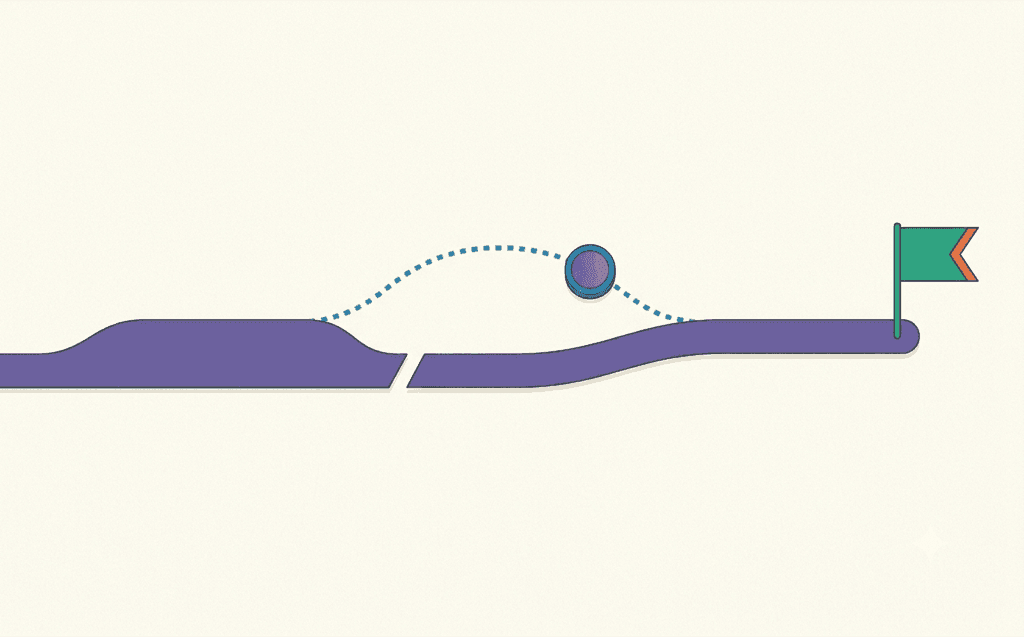
Why a daily ritual beats cramming
The case for small, consistent, corrected practice — and how memory between sessions changes everything.

The night-before cram feels productive because it's intense. But language doesn't move into long-term memory through intensity — it moves through spacing and correction. A daily ritual is built to give it both.
What cramming actually does
A long, uncorrected session loads a lot of material into short-term memory, where most of it decays within days. Worse, practising without feedback rehearses your mistakes as readily as your successes — you get fluent at being wrong. The intensity is real; the retention isn't.
What a daily ritual does instead
Twenty focused minutes a day works with how memory consolidates:
- Spacing — revisiting material across days forces the recall that builds durable memory. Ten minutes on five days beats fifty minutes on one.
- Correction in the loop — every session, your mistakes get named and fed back in, so tomorrow starts from a corrected baseline instead of repeating yesterday.
- Continuity — when the tutor remembers what you got wrong last time, practice compounds. Each day builds on the last instead of starting cold.
The exam payoff
The B2 exam rewards the things a ritual builds: automatic Redemittel, reflexive grammar, vocabulary that surfaces under time pressure. None of that comes from one heroic weekend. It comes from showing up, getting corrected, and carrying the correction forward — which is exactly the loop Heloria runs so you don't have to maintain the files by hand.