How to pass telc Deutsch B2: a realistic 10-week plan
What the exam actually tests, how the five parts are scored, and a week-by-week plan that builds from reactivation to a confident taper — the same structure Heloria runs for you.
The telc Deutsch B2 isn't a vocabulary quiz. It's a test of whether you can operate in German — read a dense text under time pressure, write a structured letter in a formal register, and hold your end of a discussion without freezing. Most people who fail don't lack the German; they lack a plan that rehearses the exam's exact shape. Here is one that works in ten weeks.
What the exam actually tests
telc B2 has four written parts plus a paired oral exam. Knowing how each is scored tells you where your hours are worth the most.
- Leseverstehen (reading) — three tasks, ~70 minutes. Speed and gist, not perfect comprehension. You will not understand every word; you are not meant to.
- Sprachbausteine (language elements) — two cloze tasks on grammar and collocation. Small in time, decisive in points. This is the most trainable part of the whole exam.
- Hörverstehen (listening) — global, detailed, and selective listening, each played a fixed number of times. No pausing, no rewinding.
- Schriftlicher Ausdruck (writing) — one letter (often a Beschwerdebrief) in a formal register, scored on content, structure, and correctness.
- Mündliche Prüfung (speaking) — a paired exam: presentation, discussion, and a planning task. Fluency and Redemittel matter more than flawless grammar.
The pass mark is 60%, and the written and oral halves are scored separately — you must clear both. That single rule changes how you should spend your time: a strong reader who never practises speaking can still fail.
The ten-week arc
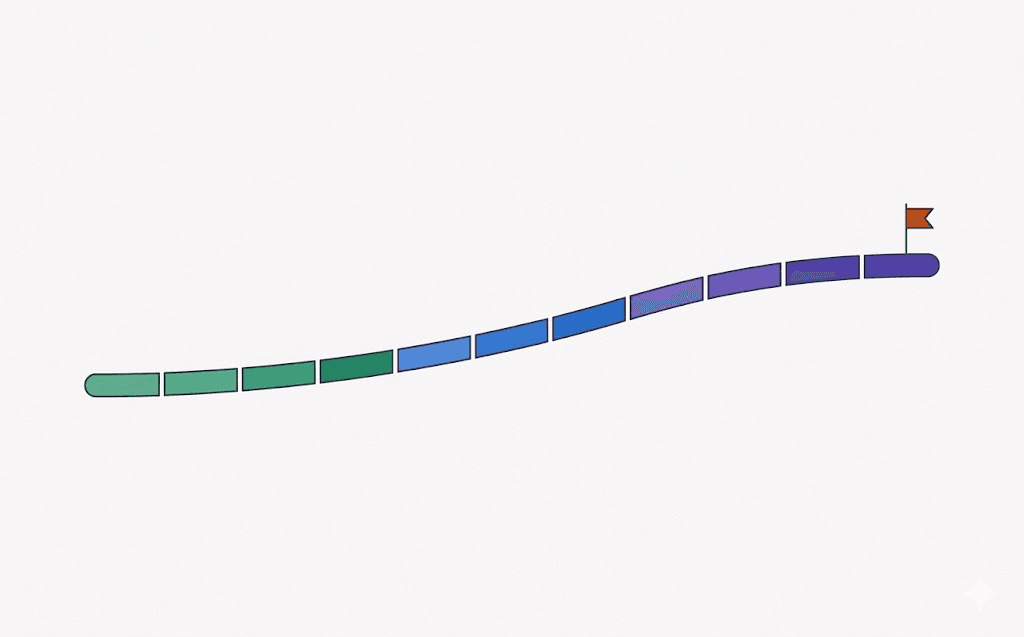
The plan moves through three phases. Don't skip the first.
Weeks 1–3: reactivation
Rebuild the foundation before you touch exam tasks. Drill the grammar that Sprachbausteine lives on — Konnektoren, cases after prepositions, Konjunktiv II — and start a working word list tagged by exam part. Do one reading and one listening task per week, untimed, just to meet the formats.
Weeks 4–7: exam shape
Now rehearse under real conditions. One full timed section every other day, alternating skills. Write one letter a week and mark it against the criteria, not by feel. Start speaking out loud daily, even alone — record yourself doing a one-minute presentation and listen back. This is where corrected, consistent practice compounds.
Weeks 8–10: the taper
Stop learning new material. Do full mock exams under time, review every mistake, and let the word list shrink to the items that still slip. Sleep matters more than cramming now. Walk in rehearsed, not exhausted.
The single highest-leverage habit
A daily ritual of small, corrected practice beats a weekend of cramming every time. Twenty focused minutes that someone (or something) corrects will move your score more than three uncorrected hours. That feedback loop — practise, get corrected, carry the correction into tomorrow — is exactly the structure Heloria runs for you, so you spend your ten weeks improving instead of bookkeeping.